
Favorite movie of all time?
View all responses
I’m generally not much into movies these days. I started one yesterday and was twenty minutes in when I looked up at the screen, realised I didn’t have a clue what was going on, and that I hadn’t really been watching it. That wasn’t always the case, although my taste has always been pretty niche.
Thinking about favourite movies, there are about eight that I always keep on my laptop. I have hundreds of others in the cloud, and access to hundreds more on various streaming services, but those eight are the ones I always want to keep to hand. I guess the one thing they have in common is that they reinforce some moral or other that I happen to agree with. By which I mean, if everybody behaved like that, the world would be a better place. I’ll just highlight one here.
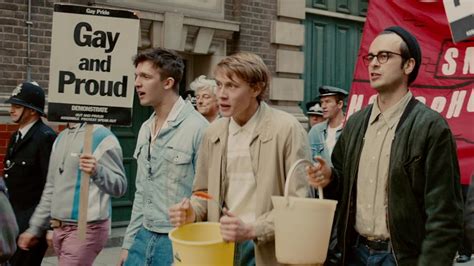
Pride is probably the most recent of them. It was made about ten years ago.
It’s a dramatisation, but the underlying theme is very real and very political. It was set during the Miners’ Strike in the UK. This was from 1984-5, and was (and remains in certain places) one of the most divisive events in UK living memory.
For many years, the miners’ union was a powerful union in the UK, and brought down a government here in the 1970s. Energy, eh? It never goes away. So much so that in the 1980s, the government of the day decided to take on the union. This led to a strike, which lasted more than a year. The miners ultimately lost, and this pretty much started the demise of the coal industry in the UK.
What I find interesting about the strike is that with the benefit of hindsight, it seems blindingly obvious that we should leave coal in the ground, which was exactly what the government wanted to do. But back then, environmental arguments were unheard of. Nobody knew how we were heating the planet. At that time, it was simply about destroying the power of the union. Now, in many cases, mines were the only source of work for entire communities, so by destroying the power of the union, the government was effectively destroying those communities. For me, the strike highlighted a government’s willingness to write people off, without setting up some Plan B to fall back on. I think that was wrong.
[Governments in the UK are elected with around a 30% share of the vote, so they can all afford to write certain sections off. Our system exaggerates this into quite large majorities in parliament. A bit like the Electoral College in the USA.]
So the movie is set against this backdrop. It’s about… I suppose you’d call them a “gay rights action group”. Only about a half dozen people (in the movie anyhow), this small, London-based group decide to start collecting money for the miners. At that time, 1984, AIDS was just beginning to rear its ugly head, so this provides another subplot.
And the movie is about what happens when this group decide to help a small mining community. It’s a serious story and to a certain point, based on true events. And the script must have had something about it because, for a small budget movie, it attracted some big names like Bill Nighy and Imelda Staunton.
It’s one of my favourites because it highlights that we move forward by co-operation, not by competition. Nothing really to do with miners, sexuality, nothing to do with any of that. Just one person helping another, no questions asked, no pre-conditions. Which happens to be something I firmly believe in.


Good choice my friend. My fave is “Mary Poppins”
LikeLiked by 1 person
I haven’t seen that since my auntie took me to the cinema, I guess when it was first released. We got all these Disney movies on dvd when my daughter was young. I mastered them all digitally but never watch them.
LikeLike